
10% OFF
Sale!

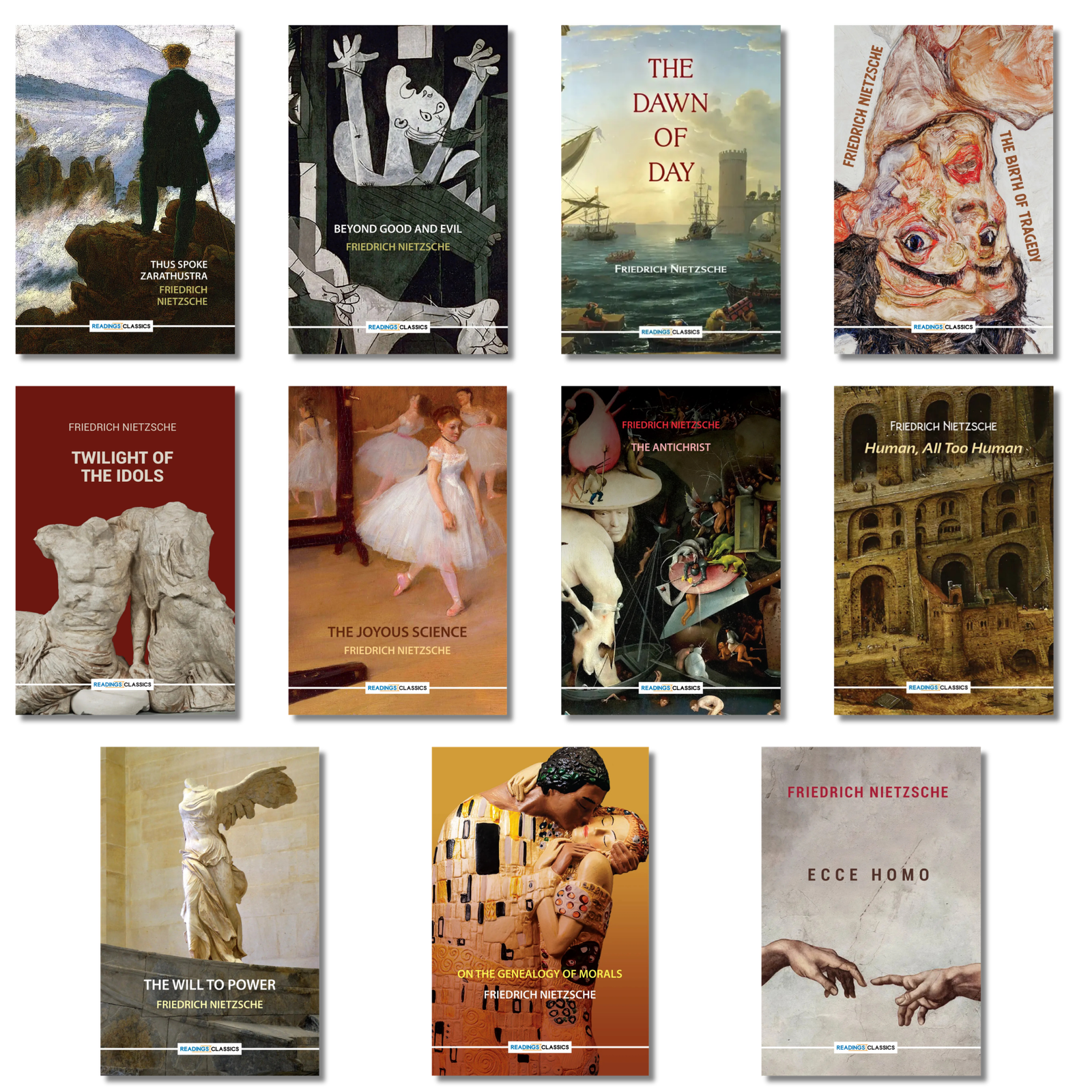
Friedrich Nietzsche 11 Books Set Reading Classics
₨6,145.00
₨ 5,500.00
You Save ₨645.00
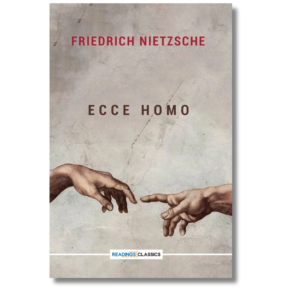
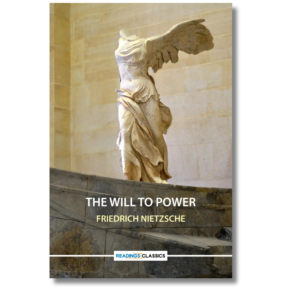
The Dawn Of Day (Readings Classics) The Dawn of Day marks Nietzsche’s decisive turn from metaphysics to a probing psychology of morality. In compact aphorisms, he investigates the hidden sources of our “altruism,” pity, guilt, and conscience, revealing how customs, climates, illnesses, and power relations shape what we call virtue. The book’s guiding project is a cheerful, unsparing “revaluation of moral values”: to free the reader from inherited humanitarian assumptions without lapsing into cynicism. He proposes experimental living as methods for testing convictions; champions intellectual honesty and “loving distance”; and sketches the free spirit who learns to govern impulses rather than deny them. First published in 1881, The Dawn of Day is Nietzsche’s laboratory where The Joyous Science and On the Genealogy of Morals are prepared. Its promise is in the title: a clear morning after dogma, when thinking becomes exploratory, humane, and unafraid of its own discoveries. Thus Spoke Zarathustra (Readings Classics) Nietzsche’s magnum opus Thus Spoke Zarathustra is a philosophical tour de force that unfolds a transcendent narrative featuring the prophet Zarathustra. Published between 1883 and 1885, Nietzsche employs poetic prose to convey profound ideas on the eternal recurrence, the will to power and the Übermensch. Zarathustra, descending from his mountain seclusion, imparts wisdom on the complexities of existence and the human condition. This philosophical allegory delves into the pursuit of individual greatness and the overcoming of societal norms. Nietzsche’s masterful use of symbolism and rhetoric challenges readers to confront their beliefs and embrace a path of self-discovery. Thus Spoke Zarathustra remains an intellectual cornerstone, inspiring thinkers across disciplines and inviting profound reflections on life’s profound questions. The antichrist (Readings Classics) Written in 1888, Nietzsche s incisive critique, The Antichrist boldly confronts conventional morality, Christianity, and the foundations of Western civilization. As a scathing rebuke of institutionalized religion, Nietzsche dissects the perceived virtues of Christianity and proclaims the arrival of a cultural shift toward a more life-affirming ethos. This compact, yet potent, work showcases his razor-sharp intellect and iconoclastic spirit, challenging readers to reevaluate deeply ingrained beliefs. The Antichrist serves as a philosophical lightning bolt, illuminating Nietzsche s uncompromising perspective on morality, faith, and the future of humanity. It is a necessary read for those seeking intellectual provocation and a deeper understanding of Nietzsche s controversial legacy. The Will To Power (Readings Classics) Posthumously assembled, The Will to Power offers a profound exploration of Friedrich Nietzsche s philosophical vision. Compiled from his notes by his sister, this work, though controversial, captures Nietzsche s unrestrained intellectual brilliance. Published in 1901, it delves into the essence of existence, the dynamics of power and the will to overcome. As a philosophical kaleidoscope, it unveils his evolving thoughts on art, culture and the Übermensch. While debated for its editorial origins, The Will to Power remains a crucial testament to Nietzsche s audacious ideas, challenging readers to grapple with the complexities of human nature and the inexorable forces that shape our destinies. Beyond Good and Evil (Readings Classics) Beyond Good and Evil challenges conventional moral norms and transcends traditional dichotomies. It delves into the complexities of morality, truth and the nature of power. Nietzsche fearlessly critiques prevailing moralities, advocating for a reevaluation of values and the emergence of a more authentic, individualistic ethos. His incisive prose and profound insights explore the intricacies of human psychology and societal constructs, leaving an indelible mark on philosophy. A thought-provoking and influential text, it continues to inspire scholars and thinkers to question established beliefs and engage in a fearless pursuit of truth. Ecce Homo: How One Becomes What One Is (Readings Classics) Ecce Homo stands as a profound self-portrait and philosophical manifesto, providing a unique glimpse into the mind of the renowned German thinker. In this introspective work, Nietzsche reflects on his life, works and the evolution of his philosophical ideas. Unapologetically bold and candid, he explores the genesis of his groundbreaking concepts, such as the Übermensch and eternal recurrence. Ecce Homo serves as a testament to Nietzsche s intellectual prowess and unwavering commitment to questioning conventional wisdom. This self-examination showcases Nietzsche s unparalleled ability to articulate complex philosophical concepts, making it an indispensable read for scholars and enthusiasts alike. Twilight Of the Idols (Readings Classics) Twilight of the Idols, penned down in 1888, serves as a philosophical sledgehammer, ruthlessly dismantling cherished ideals and cultural norms. In this succinct yet potent work, Nietzsche critiques the pillars of Western thought, exposing the flaws and contradictions inherent in morality, religion, and philosophy. Renowned for its aphoristic style, Twilight of the Idols distills Nietzsche s iconoclastic brilliance, challenging readers to question inherited beliefs and embrace a more fearless, individualistic approach to existence. As a prelude to his later masterpieces, this concise volume encapsulates Nietzsche s audacious critique of prevailing ideologies, making it a pivotal gateway into the intellectual tumult of his philosophical landscape. On the Genealogy Of Morals (Readings Classics) Written in 1887, On the Genealogy of Morals is a profound deconstruction of morality s evolution. This philosophical masterpiece scrutinizes the origins and implications of moral values, unravelling the complex interplay of power, guilt, and societal norms. Through incisive analysis and provocative aphorisms, Nietzsche challenges prevailing moral frameworks, exposing their historical underpinnings. On the Genealogy of Morals serves as a critical examination of human ethics, inviting readers to confront uncomfortable truths about societal conditioning and the dynamics of power. Nietzsche s penetrating insight and relentless intellectual rigour make this work a cornerstone for those navigating the intricate terrain of moral philosophy and cultural critique. The Birth Of Tragedy (Readings Classics) The Birth of Tragedy explores the profound interplay between the Apollonian and Dionysian forces in ancient Greek culture. Published in 1872, this foundational work unveils Nietzsche s early philosophical insights, examining the tension between order (Apollonian) and chaos (Dionysian) in artistic expression. Drawing on Greek mythology and drama, Nietzsche contends that the synthesis of these opposing elements births true artistic genius. A pioneering text, it not only marks Nietzsche s intellectual maturation but also lays the groundwork for his subsequent philosophical inquiries. The Birth of Tragedy is an essential work for those delving into Nietzschean thought and the origins of Western aesthetics. Human, all Too Human (Readings Classics) Written by Nietzsche between 1878 and 1880, Human, All Too Human is a philosophical odyssey that dissects human nature with analytical precision. Breaking free from conventional wisdom, Nietzsche explores the complexities of existence, unraveling the illusions that shroud human behavior. In this seminal work, he navigates the realms of morality, society, and individuality, exposing the frailties and contradictions inherent in the human condition. Human, All Too Human serves as a beacon of intellectual independence, laying the groundwork for Nietzsche s later philosophical developments. With a keen eye for human psychology, Nietzsche s aphoristic style invites readers to engage with a profound
More Books From This Author
View All →Related Books by Author


Related products
-
Sale!
 Best selling books
Naruto, Vol. 1: Uzumaki Naruto
Original price was: ₨ 1,000.₨ 850Current price is: ₨ 850. Add to cart -
Sale!Best selling books
On The Genealogy Of Morals
Original price was: ₨ 399.₨ 360Current price is: ₨ 360. Add to cart -
Sale!
 Best selling books
Jujutsu Kaisen, Vol. 1
Original price was: ₨ 1,000.₨ 850Current price is: ₨ 850. Add to cart -
Sale!
-
Sale!
 Best selling books
The Will To Power
Original price was: ₨ 699.₨ 630Current price is: ₨ 630. Add to cart -
Sale!
 Best selling books
One Piece, Vol. 5 From Whom The Bell To
Original price was: ₨ 1,000.₨ 850Current price is: ₨ 850. Add to cart
Reviews
There are no reviews yet.